Argentine ant infestations present a distinct biological challenge across Sacramento County due to the species' supercolony network structure. Unlike territorial native species, Argentine ants lack intraspecific…
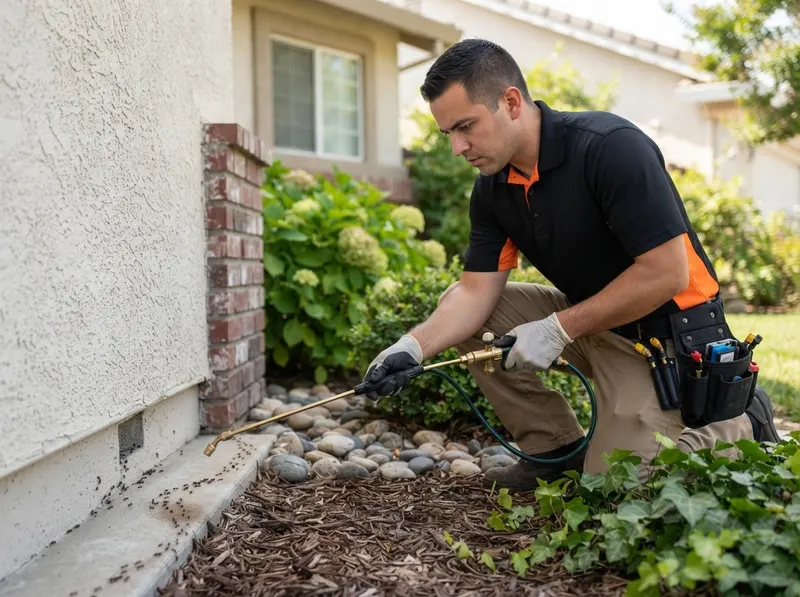
Argentine ant infestations present a distinct biological challenge across Sacramento County due to the species' supercolony network structure. Unlike territorial native species, Argentine ants lack intraspecific aggression, allowing separate sub-nests to cooperate into a massive interconnected web. Routine over-the-counter pyrethroid sprays cause budded satellite colonies, where surviving sub-groups scatter into walls, worsening kitchen incursions. In residential developments like Laguna West-Lakeside and Laguna Creek, subterranean moisture from clay soil retention and heavy decorative landscaping invites extensive tunneling beneath hardscapes and concrete foundations.
Effective management relies on non-repellent liquid and granular micro-baits that worker ants ingest and transport back through trophallaxis to hidden queens. This systematic transfer interrupts the colony reproductive cycle before workers perish. Structural vulnerabilities around Madeira and Camden Passage, where irrigation drip systems line stucco weep screeds, receive dedicated perimeter sealing and targeted structural barriers. Technicians isolate trailing corridors along utility pipes, window headers, and tree canopies bridging roofs. For factual treatment guidelines and environmental protocols, property owners consult the EPA Citizen's Guide to Pest Control and Food Safety, review the UC IPM Argentine Ant Management Guidelines, and cross-reference pest behavior records maintained by the California Department of Pesticide Regulation.
Colony behavior shifts dramatically when seasonal weather alters regional hydration levels. Dry summer transitions drive trailing lines toward kitchen sinks, dishwashers, and indoor plumbing, while fall rains inundate soil nests near Elk Grove Regional Park and District56, forcing entire subterranean colonies upward into wall cavities. In rural parcels near Sheldon and agricultural fringes along Fallbrook, nests establish deep within undisturbed mulched beds and riparian margins. Integrated pest principles established by the Entomological Society of America demonstrate that controlling plant-feeding homopterans limits carbohydrate forage for ant workers. Structural safety data from the Occupational Safety and Health Administration ensures residential treatments protect residents, while environmental standards published by the U.S. Fish and Wildlife Service and the U.S. Geological Survey guide responsible containment protocols adjacent to sensitive riparian regions such as Stone Lakes National Wildlife Refuge and the Cosumnes River Preserve.
Targeted management avoids indiscriminate chemical drenching, preserving beneficial predatory ground insects while neutralizing structural invaders. To maintain exterior exclusion barriers without disrupting soil biomes, Reliable Insect Solutions references water-quality stewardship outlined by the California State Water Resources Control Board, uses application calibration standards verified by the National Institute of Standards and Technology, and aligns residential habitat protections with criteria from the National Audubon Society.
Every job gets a firm, written price after a free on-site visit.
For standards, safe disposal, and service guidance on PEST CONTROL SEVICE in Elk Grove, useful references include U.S. EPA, ENERGY STAR, U.S. Dept. of Energy, Consumer.gov, U.S. Census Bureau, and Google Maps. General consumer and small-business resources are available from USA.gov, Better Business Bureau, FTC Consumer Advice, U.S. Small Business Administration, and Ready.gov.
Tell us about your argentine ant colony management job in Elk Grove and we'll send a clear, written quote, usually the same day.
 Reliable Insect Solutions