Reliable Insect Solutions provides professional pest control service in Elk Grove, delivering targeted perimeter defenses and biological pest management across established Sacramento County properties. Homeowners encountering sudden insect incursions find that off-the-shelf aerosol treatments scatter pests rather than addressing nesting biology.

A professional pest control service in Elk Grove is an integrated environmental pest management program that inspects exterior structural perimeters, seals biological entry portals, and applies low-impact liquid, granular, or mechanical treatments to eliminate localized insect populations and rodent vectors across Sacramento County properties.
Every service reflects the same meticulous attention to detail, whether it's a single job or a larger pest control sevice project across Elk Grove.
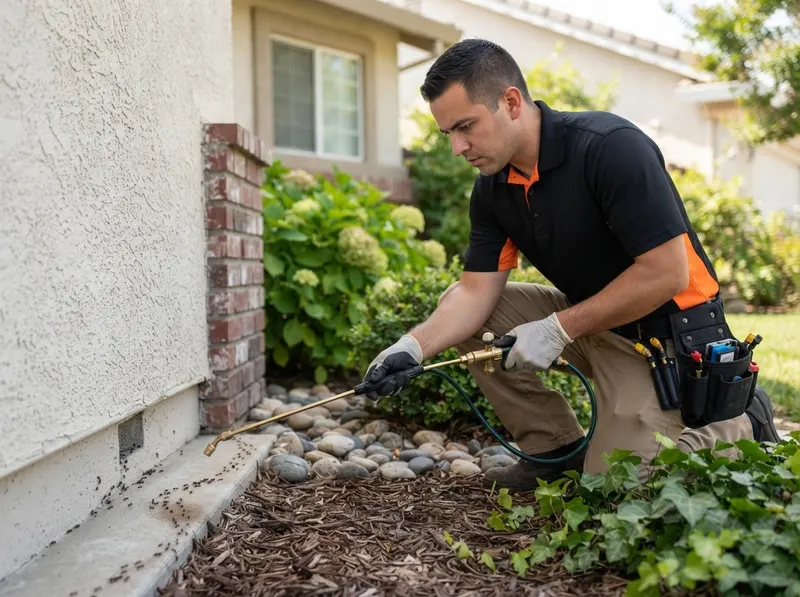
Argentine ants (Linepithema humile) establish expansive multi-queen supercolonies throughout the Sacramento Valley soil. Standard repellent sprays kill only visible foragers, which immediately triggers a survival response called budding, fracturing the main nest into multiple independent reproductive subcolonies throughout wall voids. Reliable Insect Solutions applies targeted, non-repellent liquid micro-emulsions along exterior foundation footings alongside species-tailored sweet and protein bait matrices. Foraging worker ants walk through the odorless active ingredient, cross-contaminating other workers through mutual grooming and food sharing (trophallaxis), systematically delivering the compound directly to the hidden subterranean queens. Perimeter soil borders receive focused moisture evaluations to locate satellite nests under decorative pavers, brick patios, and landscape edging, stopping trails before they access kitchen plumbing gaps.
Get a quote →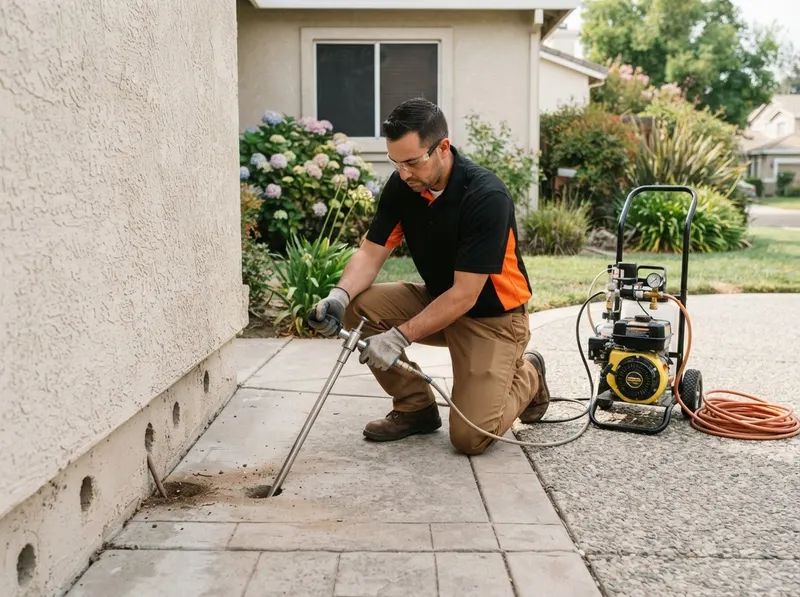
Western subterranean termites (Reticulitermes hesperus) and Formosan subterranean termites nest deep in the alluvial soils common to northern California waterways. Workers construct vertical shelter tubes composed of mud, cellulose, and saliva to bridge concrete stem walls and access structural sills, joists, and wall studs. Treatment programs utilize precision trenching and sub-slab injection along foundation perimeters using non-repellent liquid termiticides registered by the California Department of Pesticide Regulation ( CDPR ). Termites pass through this invisible treated soil zone without detection, transferring the active termiticide throughout their subterranean galleries. In addition to structural barriers, technicians evaluate crawlspace clearance, identify wood-to-ground contact hazards, check moisture levels around plumbing vents, and monitor exterior siding clearance to verify compliance with structural safety recommendations from the National Pest Management Association ( NPMA ).
Get a quote →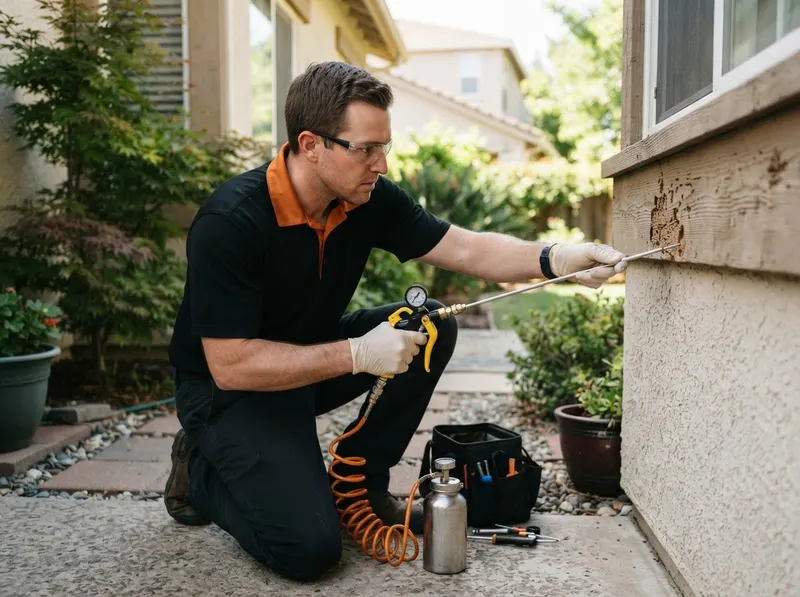
Drywood termites (Incisitermes minor) do not require ground contact or elevated soil moisture, infesting sound dry lumber during seasonal flights occurring on warm late-summer afternoons. Swarming alates penetrate structural roof rafter tails, eaves, fascia boards, and unscreened attic louvers. Technicians conduct visual inspections using high-output acoustic and fiber-optic scopes to pinpoint active gallery channels, identifying structural kick-out holes and granular, hexagonal fecal frass pellets. Localized treatments employ precision drill-and-inject methods, introducing targeted disodium octaborate tetrahydrate solutions directly into the core timber galleries. This mineral borate salt absorbs into the wood fibers, killing active nymphs and workers while leaving residual protection that deters future reinfestation, providing a localized alternative to full-home toxic fumigation tents.
Get a quote →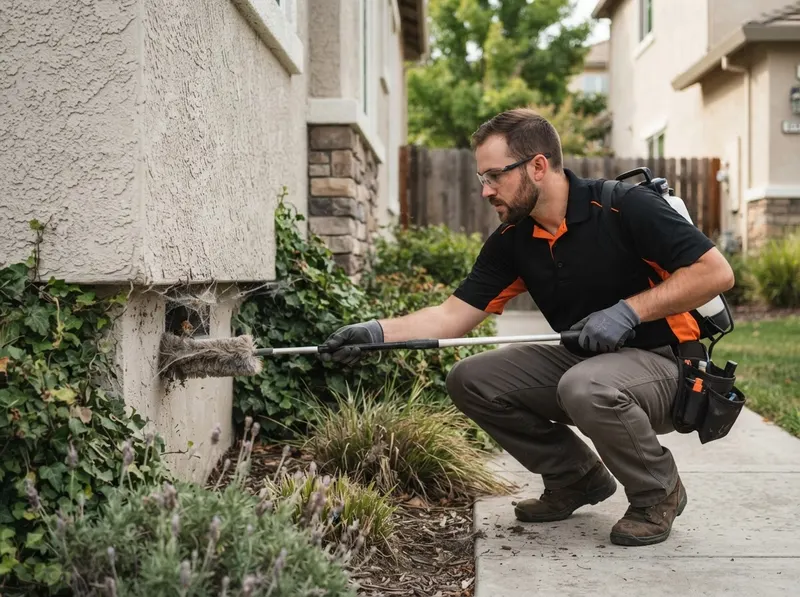
Western black widows (Latrodectus hesperus) inhabit quiet, dark recesses such as garage corners, irrigation valve utility boxes, crawlspace vents, and recessed foundation weep screeds. Females spin high-tensile, irregular webbing where they deposit papery cream-colored egg sacs containing hundreds of developing spiderlings. Technicians physically clear structural eaves, window perimeters, and patio joints up to a height of 20 feet using specialized telescopic microfiber extensions to sweep down active webs, egg masses, and dead prey debris. Technicians then apply targeted micro-encapsulated pyrethroid alternatives directly into exterior foundational voids, perimeter expansion joints, and under-eave gaps where nocturnal arachnids wait for prey, adhering strictly to perimeter runoff containment guidelines established by the Environmental Protection Agency ( EPA ).
Get a quote →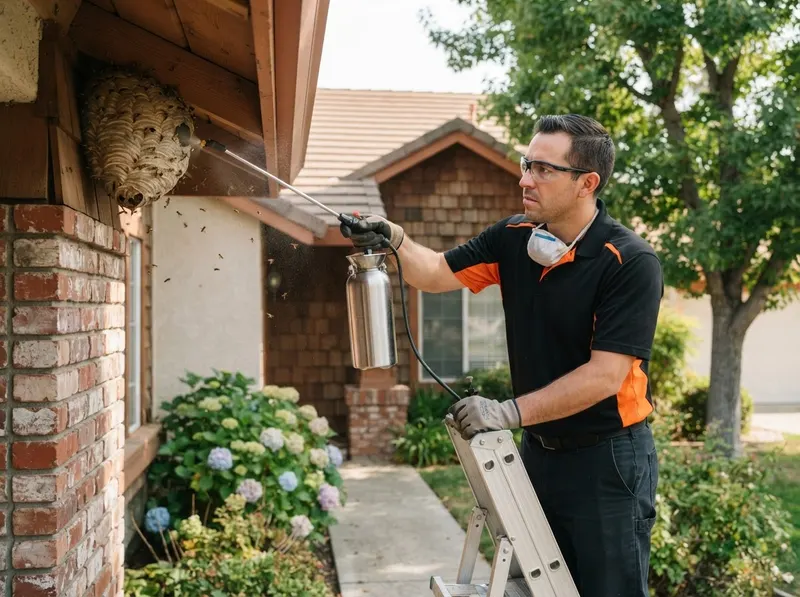
Paper wasps (Polistes dominula) and yellow jackets (Vespula species) construct aggressive aerial and cavity nests beneath structural rooflines, rain gutters, composite deck railings, and covered porch overhangs. Defending worker wasps deliver painful, repeated stings that pose significant risks to allergic household members. Reliable Insect Solutions utilizes specialized long-range directional application equipment to neutralize aggressive defensive nests safely from ground level without releasing broad chemical plumes into adjacent yards. Once colony activity ceases, technicians mechanically scrape and detach the paper nest structure, thoroughly scrub away lingering chemical footprint pheromones that attract returning foundress queens the following spring, and fit precision stainless-steel mesh over exterior soffit openings and attic vents to prevent interior attic invasions.
Get a quote →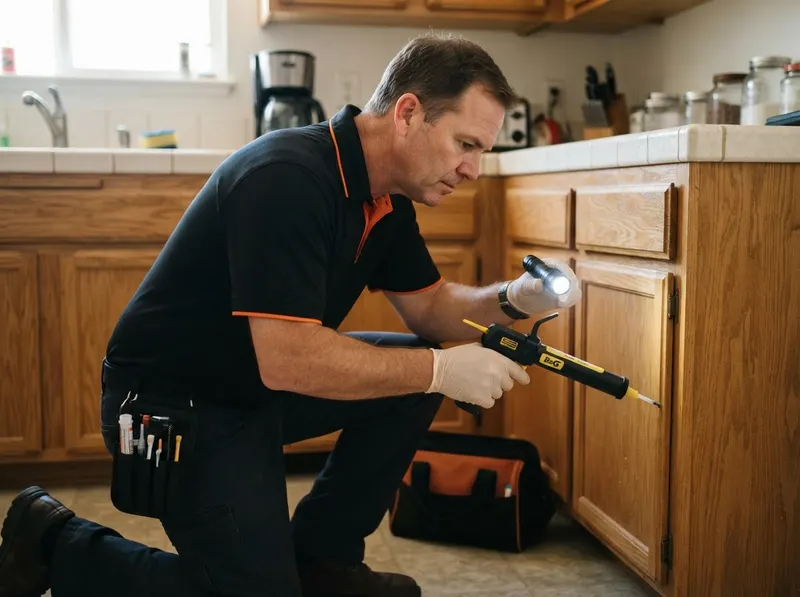
German cockroaches (Blattella germanica) are indoor structural pests that harbor in tight cracks, motor housings behind refrigerators, dishwasher insulation, and damp plumbing chases beneath kitchen sinks. They reproduce rapidly, with females producing oothecae containing up to 40 nymphs every few weeks, shedding allergen-rich cast skins and spreading pathogenic bacteria across food prep surfaces. Cleanouts eliminate breeding populations through targeted baiting strategies using specialized insect growth regulators (IGRs) combined with non-repellent attractant gel baits placed strategically along structural cabinet hinges, drawer glides, and appliance junction boxes. This dual-action protocol disrupts chitin synthesis, rendering maturing nymphs sterile while poisoning adult aggregations without discharging airborne aerosol sprays into living areas or contaminating cooking utensils.
Get a quote →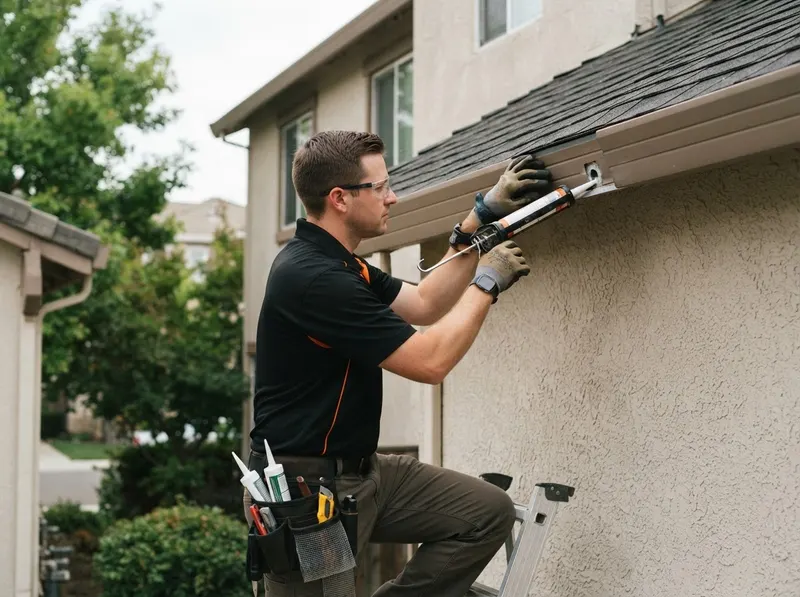
Roof rats (Rattus rattus) and field mice (Mus musculus) seek dry harborages inside residential attics, crawlspaces, and drop-ceiling voids when seasonal weather cools. Rodents gnaw on flexible PEX water pipes and electrical wiring, creating property damage and severe fire hazards. Rather than utilizing exterior second-generation anticoagulant rodenticides that pose secondary poisoning risks to predatory raptors and local domestic pets, Reliable Insect Solutions implements comprehensive physical exclusion. Technicians seal all architectural gaps larger than 1/4 inch using galvanized heavy-gauge wire mesh, copper mesh packing, and metal-reinforced polyurethane expanding foams. Interior infestations are resolved through intensive snap-trapping lines placed along structural run-boards, followed by biological sanitation of droppings according to safety protocols outlined by the Centers for Disease Control and Prevention ( CDC ).
Get a quote →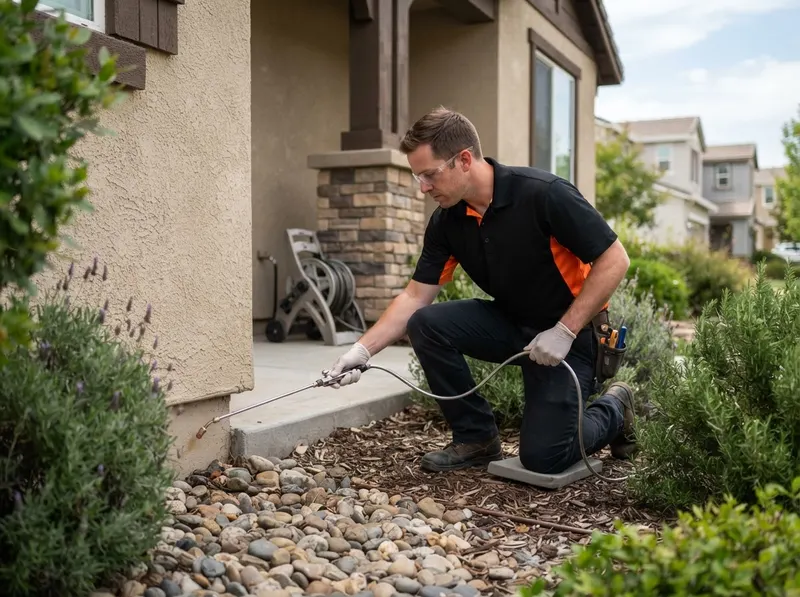
Quarterly perimeter defense creates an active, multi-layer protective buffer around the exterior building perimeter to stop seasonal migrations before pests cross entry thresholds. Every three months, technicians evaluate the immediate structure, clearing spider webs from entryways and treating a 6-foot band horizontally across landscape soil and 3 feet vertically up the foundation stem wall. The program alternates biological modes of action between seasons to prevent metabolic insecticide resistance, targeting spring ant colony buddings, summer spider hatchings, and autumn perimeter invader migrations. Field technicians clear landscape mulch away from weep screeds, check irrigation zones for pooling water, inspect weatherstripping around exterior doors, and replenish child-resistant mechanical monitoring stations situated around external boundaries.
Get a quote →You get a firm, itemized quote for your pest control sevice before any work begins, no surprises, no pressure.
Careful prep, tidy work, and a full cleanup when we are done. We treat your home and belongings like our own.
The same trusted, background-checked team from the first call to the final check.
Homeowners navigating regional pest pressure must balance long-term prevention against immediate intervention. If an infestation involves sudden subterranean termite swarms, active aerial wasp nests along lower eaves, or German cockroaches breeding inside cabinetry, a single-treatment corrective cleanout provides immediate targeted knock-down; the trade-off is that single visits do not prevent future migratory waves once the protective barrier naturally degrades over 60 to 90 days. If the residence faces continuous Argentine ant trails, black widow repopulation from nearby open spaces, or exterior perimeter pressure, a quarterly maintenance plan provides year-round defense using low-impact materials; the trade-off is a recurring seasonal investment.
For properties backing up to natural riparian corridors, physical exclusion sealing every foundation penetration stops roof rats and mice permanently; the trade-off is a higher initial upfront cost compared to temporary exterior bait stations. When damp perimeter soil promotes earwigs, sowbugs, and oriental roaches, installing a dedicated 3-foot dry perimeter rock border alongside targeted granular applications eliminates moisture harborage; the trade-off is the manual labor required to clear dense mulch beds away from stucco weep screeds. Choosing between localized spot treatments and perimeter-wide defensive barriers depends entirely on structural vulnerability: localized treatments address isolated interior breaches quickly with minimal chemical footprint, while continuous perimeter barriers establish wide exterior transfer zones that intercept invasive insects before they penetrate the living envelope.
In all scenarios, relying on mechanical exclusion and species-specific baits delivers permanent biological resolution, whereas broad-spectrum repellent sprays merely scatter colonies into adjacent wall voids.
Every project gets a firm, written price after a free on-site visit. Ranges below for orientation.
Tell us about your pest control sevice job and we'll send a clear, written quote, usually the same day. Or just call and talk to a real Elk Grove pro.
(279) 236-4116
Properties situated between the Stone Lakes National Wildlife Refuge to the west and agricultural boundaries near Sheldon experience unique biological pest pressures driven by regional water movement and agricultural land use. Heavy clay loam soils throughout the Laguna Creek drainage basin expand during winter rains, creating deep subterranean fissures where Argentine ants construct vast interconnected nesting networks. When summer temperatures consistently exceed 95 degrees across the Sacramento Valley, surface soils dry out, forcing subterranean ant colonies and hunting spiders upward along foundation stem walls and into air-conditioned interior living zones. Expansive riparian corridors like the Laguna Creek Parkway, District56 green spaces, and Elk Grove Regional Park provide natural transit corridors for roof rats and deer mice. During autumn harvest events across adjacent agricultural lands and vineyards near the Cosumnes River Preserve, field rodents migrate into residential neighborhoods such as Madeira, Camden Passage, and Fallbrook. These rodents exploit roof eaves, crawlspace vents, and gaps where air conditioning lines enter stucco siding. Understanding these localized ecological factors allows Reliable Insect Solutions to deploy specialized pest control service programs tailored to specific neighborhood microclimates, maintaining exterior barriers that account for regional soil settling, local irrigation practices, and municipal drainage patterns throughout Sacramento County.
Free estimates for Elk Grove & the surrounding area.
For standards, safe disposal, and service guidance on pest control sevice in Elk Grove, useful references include U.S. EPA, ENERGY STAR, U.S. Dept. of Energy, Consumer.gov, U.S. Census Bureau, and Google Maps. General consumer and small-business resources are available from USA.gov, Better Business Bureau, FTC Consumer Advice, U.S. Small Business Administration, and Ready.gov.
 Reliable Insect Solutions